Why Every Serious Trainer Needs a Lung Trainer in Their Stack
You track your lifts. You monitor your splits. You dial in your recovery. You’ve optimized almost everything about the way you train.
But there’s one system most serious athletes never touch and it’s quietly capping every other gain you’ve made.
Your respiratory muscles.
A lung trainer changes that. Here’s why it belongs in your stack.
Your Lungs Aren't the Problem. Your Breathing Muscles Are.
When you hit a wall mid-workout that burning, gasping, nothing-left feeling it’s easy to blame fitness. But more often than not, the culprit is respiratory muscle fatigue.
Your diaphragm and surrounding breathing muscles work just as hard as your legs during intense effort. And just like undertrained legs, undertrained respiratory muscles fatigue early diverting blood flow away from your working muscles to keep up with the demand of just breathing.
The result: your legs still have gas in the tank, but your breathing can’t keep pace. Performance drops. Not because you’re unfit because your respiratory system is the weakest link.
A lung trainer targets that link directly.
What a Lung Trainer Actually Does
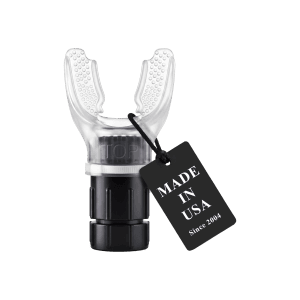
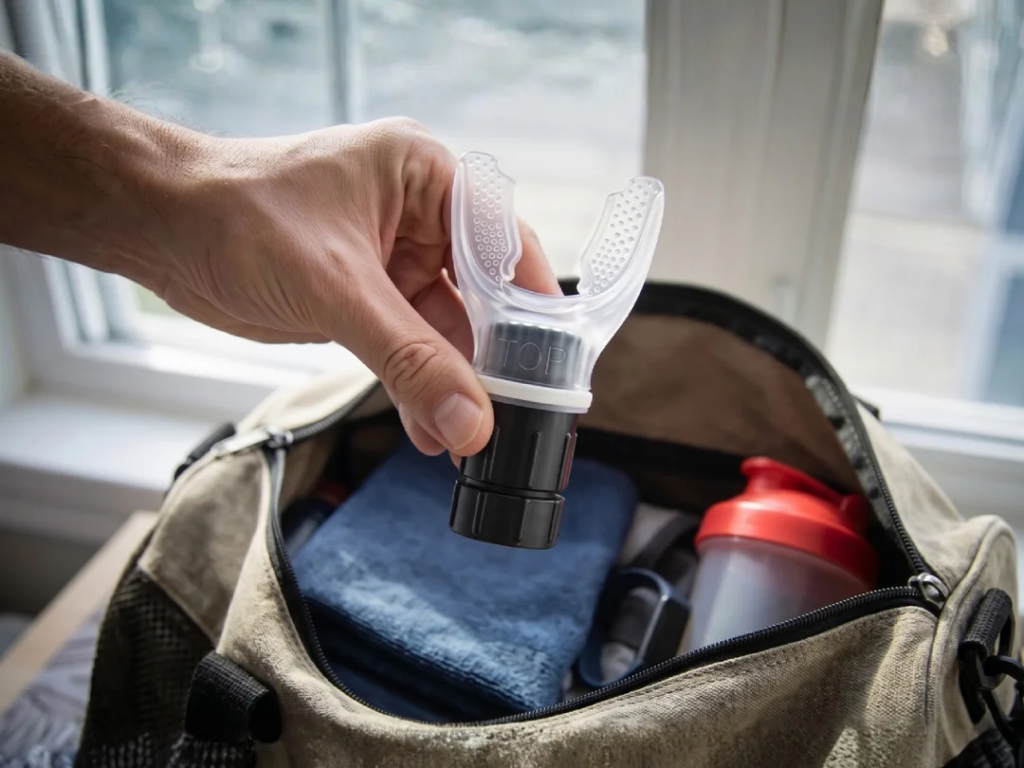
A lung trainer, also called a respiratory muscle trainer or breathing resistance device works on one straightforward principle: progressive overload applied to your breath.
Every inhale and exhale is performed against resistance, forcing your diaphragm and respiratory muscles to work harder with every rep. Over time, they adapt. They get stronger. They fatigue later. And when your respiratory muscles stop being the bottleneck, everything else in your training rises with them.
The performance benefits stack up fast:
- Higher output threshold before breathing becomes the limiting factor
- Faster recovery between hard efforts and sets
- Lower perceived exertion at the same intensity
- Greater composure under maximum load
These aren’t marginal gains. For athletes who have already optimized most of their training, respiratory muscle training is often the highest-return area left untouched.
How to Add It to Your Current Training
A lung trainer isn’t a replacement for your existing program. It’s an addition and a lightweight one. Ten to fifteen minutes a few times per week is enough to produce measurable results within four to six weeks.
Pre-workout priming: Use your lung trainer for five minutes before training to activate your respiratory muscles and prime your breathing mechanics before the session starts. Think of it as a warm-up for the system that drives everything else.
Between sets: Instead of passive rest, use recovery time between heavy sets for controlled resistance breathing. Your heart rate recovers, your respiratory muscles keep working. Efficiency stacked on efficiency.
Standalone sessions: On active recovery days, a dedicated ten-minute respiratory training session keeps adaptation moving without adding load to your body.
The protocol is simple. The results compound.
The Competitive Edge You Haven't Claimed Yet
At the highest levels of performance, the margins are thin. The athletes breaking through plateaus aren’t always the ones training harder they’re the ones finding edges that others haven’t looked for yet.
Respiratory muscle training has been used in elite sport and specialized performance settings for decades. The tools to access it are now compact, drug-free, and built for daily use outside of a clinical or professional setting.
If you’re serious about performance if you’re tracking everything elsethere’s no good reason to leave your respiratory system untrained.
Your lung trainer is the piece of the stack you’ve been missing.
Train Your Breath with Expand-A-Lung
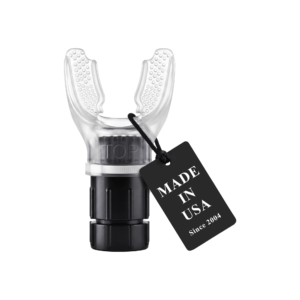
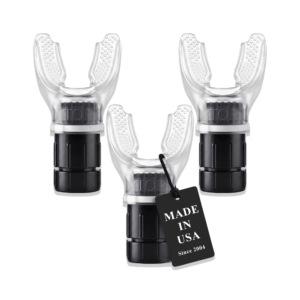
Expand-A-Lung is a compact, drug-free respiratory training device
designed to strengthen breathing muscles for everyone from elite
athletes to everyday performers.