Footwork Is Only as Fast as Your Breath: The Overlooked Link Between Breathing and Agility

– and still watch your speed fall apart in the third round, the fourth quarter, or the final set. Coaches will tell you to “reset your feet.” Rarely does anyone tell you to reset your breath first.
That’s the gap. Footwork isn’t just a leg skill. It’s an oxygen-delivery skill wearing cleats.
Why Footwork Breaks Down Before Your Legs Do
Fast, precise footwork depends on quick neuromuscular firing your brain telling your feet exactly where to go, at speed, under fatigue. That signal quality is oxygen-dependent. When your breathing muscles fatigue and oxygen delivery drops, the first thing to go isn’t raw leg strength it’s precision. Steps get heavier. Reaction time slows. The half-step that used to beat your opponent now arrives a beat late.
This is why athletes often say their legs “still had gas” but their movement felt sluggish. The legs weren’t the limiter. The breathing system feeding them was.
The Diaphragm Is Working Overtime During Footwork... Literally
Quick directional changes brace the core hard, over and over, rep after rep. Your diaphragm isn’t just a breathing muscle in these moments. It’s also a core stabilizer, firing to keep your trunk rigid every time you cut, plant, or pivot.
That’s a dual job most athletes never train for directly:
- Stabilize the trunk for every cut and plant
- Keep oxygen moving to fuel the next ten cuts after that
Train the diaphragm like any other muscle under repeated load, and both jobs get easier. Footwork stays sharp longer, and the “gasping recovery” between bursts gets shorter.
Three Ways Breathing Directly Shapes Footwork Quality
1. Breath timing controls bracing quality
Athletes who exhale sharply on the plant or cut brace more effectively than those holding their breath through the movement. A held breath spikes internal pressure in a way that stiffens the whole system, useful for a single max-effort lift, counterproductive for footwork that needs to stay loose and reactive.
Applicable cue: Exhale on the cut, not before it. Timing the exhale to the movement rather than breathing on a fixed count keeps the trunk braced without locking up the hips.
2. Nasal breathing keeps your rhythm under control
Mouth-breathing under moderate effort tends to speed up breathing rate faster than it needs to, which can rush footwork tempo along with it choppy, rushed steps instead of controlled ones. Nasal breathing, where pace allows, keeps the breathing rate and often the footwork rhythm steadier.
Applicable cue: In drills below max intensity, keep the mouth closed as long as you can hold form. When you can’t anymore, that’s useful data on your current ceiling.
3. Recovery breathing determines your next rep quality
The 10–20 seconds between footwork reps is where most athletes waste their advantage panting shallow, upper-chest breaths that do little to actually restore oxygen delivery. Slower, fuller breaths in that gap even just two or three of them refill the tank more efficiently than ten shallow ones.
Applicable cue: Between reps, take two slow breaths through the nose, expanding the ribs outward, before your next rep starts. Resist the urge to rush back in on empty.
A Simple Footwork + Breath Drill to Try This Week
No equipment needed beyond space to move.
- Set up a 5-yard lateral shuffle pattern (left-right-left-right).
- Perform 4 shuffles at moderate speed, focusing on a sharp exhale on each plant.
- Rest 15 seconds, using two full nasal breaths not a gasp-and-go.
- Repeat for 6 rounds, tracking whether your footwork stays crisp into rounds 5 and 6.
Most athletes notice their form degrades noticeably less by round 6 once the breath is trained alongside the feet not because the legs got stronger in a week, but because the system feeding them didn’t run out of control as early.
Training the Breath Like You Train the Feet
Footwork drills get repeated because repetition builds pattern and speed. The same logic applies to breathing except almost nobody applies it. The breathing muscles respond to resistance and repetition exactly like any other muscle group, which is the entire idea behind resistance-based breath training: instead of hoping your breathing holds up under fatigue, you train it to.
Pair a footwork session with breath-resistance training a few times a week, and the two start reinforcing each other sharper plants, steadier tempo, and a recovery window that actually recovers.
Fast feet get all the attention. The breath is what keeps them fast when it matters.
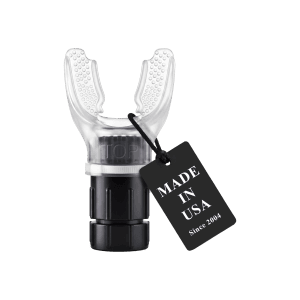
Expand-A-Lung is a compact, drug-free respiratory training device
designed to strengthen breathing muscles for everyone from elite
athletes to everyday performers.