How to Build Unstoppable Endurance with Respiratory Training
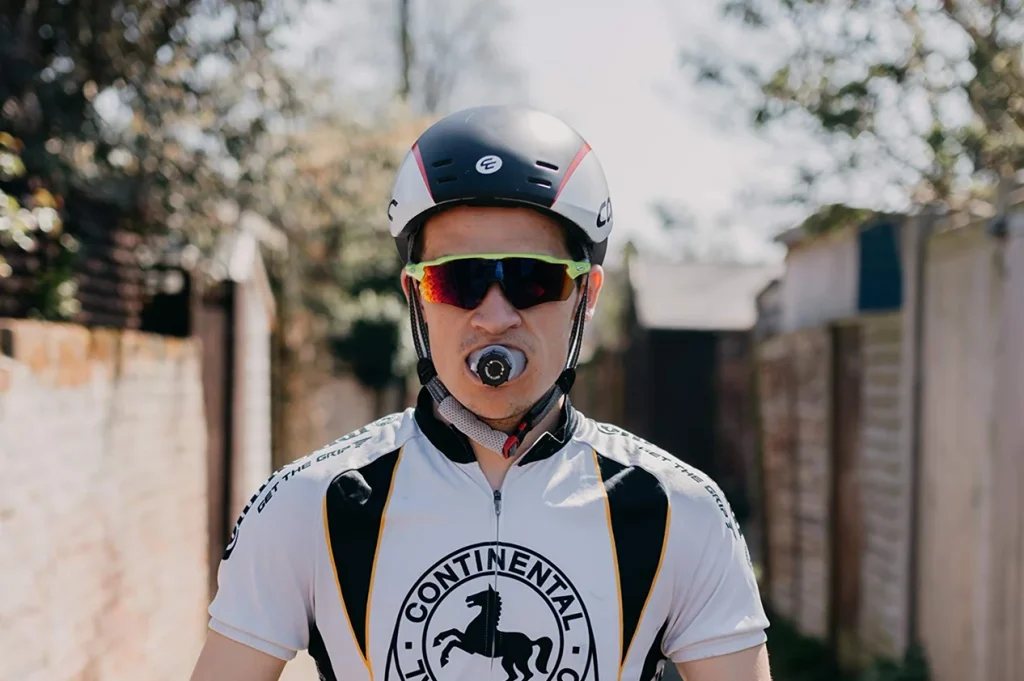
You can have the strongest legs in the room. An iron will. A training plan that would make most people tap out. But the moment your lungs start burning and your breathing turns ragged none of that matters.
Endurance isn’t just about legs. It isn’t just about heart rate. It’s about breath. And most people never train it.
Here’s how to change that.
Why Your Breathing Is the Bottleneck
When you push hard whether you’re on mile eight of a run, in the middle of a HIIT circuit, or grinding through the final rounds of a session your respiratory muscles are working just as hard as your legs. But unlike your quads or your core, most people never deliberately train those muscles.
Your diaphragm and the surrounding respiratory muscles are responsible for every breath you take under load. When they fatigue, breathing becomes less efficient. Your body starts diverting blood flow away from your working muscles to support the effort of just breathing. Performance drops. That burning, gasping feeling kicks in and it’s not always your fitness. Sometimes it’s simply undertrained breathing mechanics.
Training your breathing directly means your respiratory muscles can sustain higher effort for longer, so the rest of your body can keep doing its job.
The Foundation: Understanding Respiratory Muscle Training
Respiratory muscle training (RMT) is the practice of deliberately strengthening the muscles involved in breathing the same way you’d train any other muscle group. The principle is simple: apply resistance, create adaptation, get stronger.
When you breathe against resistance whether through a dedicated device or specific exercises your diaphragm and accessory breathing muscles develop greater endurance and force output. Over time, this translates to:
- Less perceived effort at the same exercise intensity
- A higher threshold before breathing becomes the limiting factor
- Faster recovery between hard efforts
- More efficient oxygen use during sustained output
It’s one of the highest-return areas of performance improvement most active people have never touched.
How to Start Training Your Breathing
1. Master Diaphragmatic Breathing First
Before adding any resistance or intensity, get your mechanics right. Most people default to shallow chest breathing especially under stress or during exercise. Chest breathing uses less lung volume and tires out the wrong muscles.
Diaphragmatic (belly) breathing engages your full lung capacity and is the foundation of efficient breathing under load.
How to practice:
- Lie flat or sit upright
- Place one hand on your chest, one on your belly
- Inhale slowly through your nose — your belly should rise first, chest barely moving
- Exhale fully, letting your belly fall
- Aim for 5–10 minutes daily, and start consciously applying it during warm-ups
Once this becomes automatic, it carries over into training.
2. Add Controlled Breathing Patterns to Your Workouts
One of the simplest ways to train your respiratory system is to make your breathing intentional during exercise not reactive.
For running: Sync your breath to your stride. A 3:2 pattern (3 steps inhale, 2 steps exhale) is a good starting point for easy to moderate effort. As pace increases, shift to 2:1. This keeps your breathing rhythmic and prevents the erratic gasping that signals respiratory fatigue.
For strength and HIIT: Exhale on the effort (the hardest part of a movement), inhale on the recovery. This engages your core and stabilizes your breathing pattern under load.
For cycling or rowing: Focus on full exhales. Most people cut their exhales short, which limits how much fresh air comes in on the next breath. Push all the air out and let the inhale happen naturally.
3. Incorporate Breathing-Specific Training Sessions
Just like you have days dedicated to strength, mobility, or conditioning carve out time specifically for respiratory training. Even 10-15 minutes a few times per week produces measurable results.
Pursed Lip Breathing Intervals: Inhale normally, then exhale slowly through pursed lips (like you’re blowing through a straw) for twice as long as the inhale. 4 seconds in, 8 seconds out. Repeat for 10 rounds. This builds control, slows your respiratory rate, and trains your body to use each breath more efficiently.
Box Breathing for Recovery: 4 seconds in → 4 seconds hold → 4 seconds out → 4 seconds hold. This is as much a nervous system reset as it is a breathing drill. Use it between hard sets, after a tough session, or any time you want to accelerate recovery.
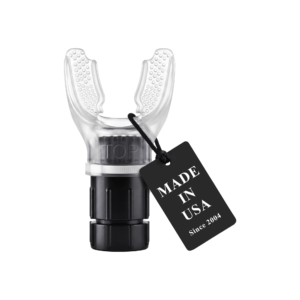
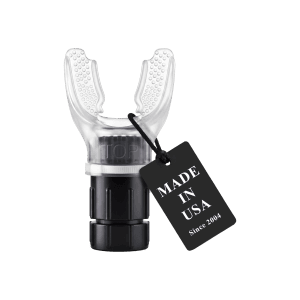
Resistance Breathing: The next step up. Breathing against added resistance forces your respiratory muscles to work harder similar to adding weight to a lift. This can be done with a dedicated breathing trainer or through specific techniques like breathing through a narrowed airway. The principle is progressive overload applied directly to your breath.
4. Train Your Breathing Under Load
The real gains happen when you apply better breathing mechanics to actual training conditions not just in isolation.
Tempo breathing runs: On an easy run, focus entirely on breathing through your nose. It’s harder than it sounds. Nasal breathing naturally limits your intake and forces your respiratory system to become more efficient. Start with short distances and build up.
Breath holds during recovery: After a hard effort, practice 5–10 second breath holds at the top of an inhale before your next breath. This builds CO2 tolerance, which is closely linked to how quickly you feel the urge to breathe and therefore how calm and controlled you stay under pressure.
Loaded carry breathing drills: Grab a moderate weight (farmer’s carry, sandbag, whatever you have) and walk while focusing solely on keeping your breath slow and nasal. Maintaining breathing control while carrying load is a direct carryover to any sport or activity where you’re working your whole body.
What to Expect
Respiratory training doesn’t deliver overnight results but it compounds fast. Most people notice a difference in perceived effort within two to four weeks of consistent practice. By six to eight weeks, the change in sustained output is measurable.
The milestones tend to look like this:
- Week 1–2: Breathing patterns feel more deliberate. Awareness increases.
- Week 3–4: Breathing fatigue during moderate effort starts to decrease.
- Week 5–8: Higher intensities feel more controlled. Recovery between efforts improves.
- Week 8+: Breathing stops being the ceiling other performance factors take the lead.
The Bottom Line
Most people train their body from the outside in building the muscles they can see, the outputs they can measure. But endurance lives in the breath. If your respiratory system is the weakest link in your performance chain, all the miles and all the reps in the world will only get you so far.
Train your breathing like you train everything else. Give it structure. Give it resistance. Give it consistency.
The air’s there. Go get it.
Ready to Take Your Breathing Further?
The exercises above build a strong foundation but if you want to accelerate the process, respiratory muscle training with added resistance is the next level.
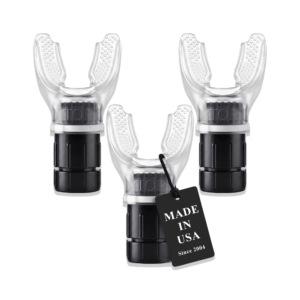
The Expand-A-Lung Breathing Trainer is a compact, drug-free device built to do exactly that. It puts your respiratory muscles under progressive resistance with every breath, so you’re not just breathing more you’re training harder with every rep.