Finding the Right Resistance Level for Your Training
One of the most common questions new users ask is:
“What resistance level should I start with?”
The answer isn’t about choosing the hardest setting. It’s about choosing the right one.
Just like strength training, breathing resistance should match your current ability. Starting with the proper breathing trainer resistance allows you to develop good technique, build consistency, and gradually challenge your breathing muscles over time.
Why Resistance Matters
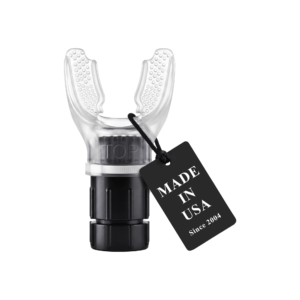
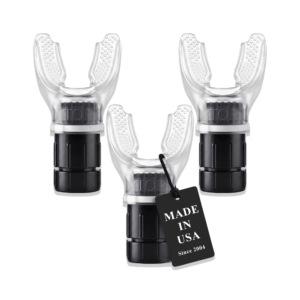
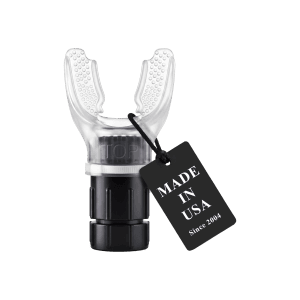
Expand-A-Lung is designed with adjustable resistance so you can tailor your breathing workouts to your current fitness level.
If the resistance is too low, your breathing muscles may not be challenged enough.
If it’s too high, maintaining proper breathing technique becomes difficult.
The goal is to find a setting that feels challenging while allowing you to complete each breath with control.
Start Lower Than You Think
Many beginners assume they should immediately increase the resistance.
In reality, it’s often better to start with a lighter setting and focus on mastering your breathing technique first.
When beginning beginner respiratory muscle training, ask yourself:
- Can I complete each breath without straining?
- Can I maintain a slow, steady breathing rhythm?
- Am I able to finish my workout with good technique?
If the answer is yes, you’ve likely found a good starting point.
Signs Your Resistance Is Too High
If you notice any of the following, consider reducing your resistance setting:
- You’re unable to complete a full breath comfortably.
- Your breathing becomes rushed.
- Your shoulders begin to tense excessively.
- You lose proper posture.
- You need frequent breaks after only a few breaths.
A lower resistance with excellent technique is more productive than struggling through every repetition.
Signs Your Resistance May Be Too Low
Once you’ve been training consistently, you may notice that your current setting feels easy.
You may be ready to increase resistance if:
- You complete every set comfortably.
- Your breathing remains controlled throughout.
- Your technique stays consistent from the first breath to the last.
- You recover quickly between sets.
Increase the resistance gradually rather than making large adjustments.
Understanding Respiratory Muscle Trainer Settings
The adjustable respiratory muscle trainer settings allow your workouts to evolve as your breathing muscles adapt.
Think of resistance the same way you think about adding weight to a strength-training exercise you increase it only when your current level becomes manageable.
Instead of asking, “What’s the highest resistance?”
Ask:
“Can I maintain perfect breathing technique at this level?”
That question will guide your progress more effectively than chasing a harder setting.
Progress Gradually
Improvement happens over weeks. Not overnight.
A good progression might look like this:
Week 1–2
- Low resistance
- Focus on technique
- Build consistency
Week 3–4
- Maintain smooth breathing
- Add a small resistance increase if appropriate
Ongoing
- Continue increasing only when your current setting feels controlled and comfortable.
Small adjustments often lead to better long-term progress than making large jumps.
Everyone Progresses Differently
Your ideal resistance depends on factors such as:
- Current fitness level
- Training experience
- Workout goals
- Breathing control
- Consistency
Avoid comparing your settings with someone else’s. The right resistance is the one that supports quality breathing for you.
Common Resistance Mistakes
Starting Too Heavy
Trying to make every workout difficult can reduce breathing quality and make it harder to build good habits.
Increasing Resistance Too Quickly
Progress is earned through consistency.
Stay with a setting until it feels comfortable before moving up.
Ignoring Technique
Resistance should never come at the expense of controlled breathing.
Always prioritize slow, deliberate breaths.
Chasing Numbers
Higher resistance isn’t necessarily better.
Consistent training with excellent technique is what drives long-term improvement.
How Often Should You Adjust Resistance?
There’s no fixed schedule.
Instead, ask yourself after each week:
- Do I still feel challenged?
- Can I complete every breath comfortably?
- Has my technique stayed consistent?
If the answer is yes, you may be ready for a small increase.
If not, stay where you are and continue building confidence.
Train Smarter, Not Harder
The best breathing workouts aren’t about using the highest setting. They’re about using the right one.
Choosing appropriate breathing trainer resistance, understanding your respiratory muscle trainer settings, and progressing gradually helps create a routine that’s sustainable and effective.
Remember, breathing training is a skill. Like any skill, it improves through patience, consistency, and proper technique.
Frequently Asked Questions
What resistance should beginners start with?
Most beginners should begin with a comfortable, lower resistance that allows them to maintain slow, controlled breathing throughout the workout.
How do I know when to increase resistance?
If you can complete all your sets with good breathing control and consistent technique, it may be time to make a small adjustment.
Is higher resistance always better?
No. The best resistance is one that challenges you while allowing you to maintain proper breathing technique.
Can I change the resistance every workout?
Frequent adjustments usually aren’t necessary. Give yourself time to adapt before increasing resistance.
Train Your Breath with Expand-A-Lung
Expand-A-Lung is a compact, drug-free respiratory training device
designed to strengthen breathing muscles for everyone from elite
athletes to everyday performers.